5 Ways Standing Water Can Ruin Wine and Food Stored in Your Basement

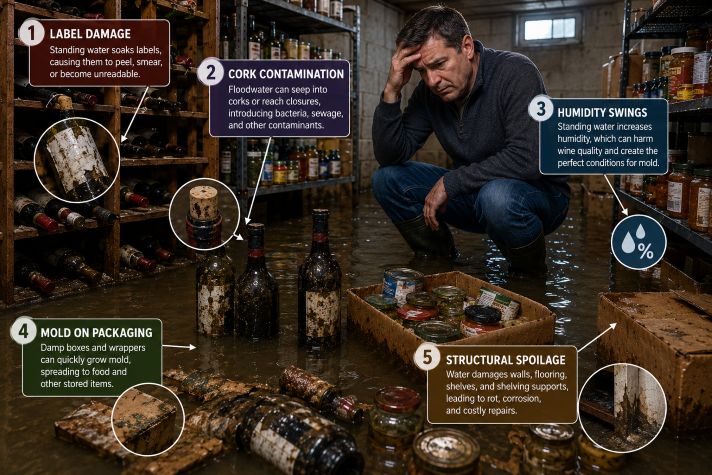
Standing water can damage stored food and wine even when a basement does not look badly flooded. Water can soak through cardboard boxes, peel off labels, and damage materials that absorb moisture. It can also increase humidity and weaken shelves, walls, and other storage areas.
The U.S. Food and Drug Administration (FDA) recommends throwing away food exposed to floodwater unless it is sealed in approved waterproof packaging. For this reason, removing water quickly is important, especially when a basement is used to store food, wine, or other items for long periods.
Removing the water is the first step toward controlling the problem. Prompt basement water removal can reduce the amount of time bottles, boxes, shelving, and building materials remain exposed to moisture. Drying also matters after the visible water disappears. The U.S. Environmental Protection Agency (EPA) recommends drying water-damaged areas and items within 24 to 48 hours to help prevent mold growth.
1. Wine and Food Labels Can Become Unreadable
Paper labels are often among the first things damaged when water reaches a storage area. They can wrinkle, peel, stain, or separate completely from bottles and cans. This may seem like a cosmetic problem, but labels often contain useful information such as product names, dates, ingredients, vintages, and storage instructions.
Floodwater creates an added concern because dirt and microorganisms can remain on wet labels. The FDA advises removing labels from salvageable, undamaged commercial metal cans after flood exposure because the labels can hold dirt and bacteria. The agency recommends cleaning and sanitizing suitable containers before relabeling them.
Quick water extraction helps by limiting how long packaging remains wet. Moving unaffected products to a dry location can also protect labels before moisture spreads through stacked boxes and shelving.
2. Corks and Bottle Closures May Be Exposed to Contaminated Water
Wine bottles can appear secure even when water has risen around them. However, a bottle closure should not be treated as safe after contact with floodwater. This is particularly important when the water may contain sewage, chemicals, soil, or other contaminants.
The FDA warns that beverage containers with closures such as screw caps, twist caps, snap lids, and similar designs cannot be effectively disinfected after contact with floodwater. The agency recommends discarding affected products in these types of containers.
Wine owners should therefore avoid judging a bottle only by how the glass looks. Removing standing water quickly helps protect stored bottles from further damage. It also makes it easier to identify which bottles are still safe and which ones need to be checked more carefully.
3. Standing Water Can Disrupt Humidity Levels
Basements are naturally prone to moisture because they sit partly or completely below ground. Adding standing water can make moisture control much harder. Water evaporates into the surrounding air, while wet walls, flooring, boxes, and wooden shelving can continue releasing moisture even after puddles are gone.
The EPA identifies excess moisture as a major factor in indoor mold problems. Its guidance notes that moisture control is the key to controlling mold and recommends drying wet materials within 24 to 48 hours. The agency also identifies indoor relative humidity above 60 percent as a condition worth investigating when dealing with moisture problems.
Removing water quickly reduces this moisture source. Fans, dehumidifiers, and ventilation may then help bring the space back to stable conditions. Maintaining that stability is important for keeping food and drinks fresh, since changes in heat and humidity can affect how well stored products hold up over time.
4. Mold Can Spread Across Boxes and Packaging
Cardboard boxes, paper wrappers, wooden crates, and similar materials absorb water easily. When they stay damp, mold can begin to grow. Wet boxes and packaging can also spread moisture to other items stored next to or on top of them.
The U.S. Department of Agriculture Food Safety and Inspection Service (USDA FSIS) advises disposing of food stored in cardboard or other non-waterproof packaging after exposure to floodwater. It also recommends moving food and wine to higher storage areas when there is a risk of flooding.
Fast drying limits the time the packaging remains damp. Wet cardboard should be separated from dry goods, and affected products should be assessed using food safety guidance rather than appearance alone.
5. Water Can Damage the Storage Area Itself
The final risk goes beyond individual bottles or food packages. Water can soak into drywall, wood, flooring, cabinets, racks, and other materials surrounding the collection. If those materials stay wet, the basement may remain damp even after the standing water is gone.
The EPA recommends finding and fixing the source of the water as soon as possible. Wet materials should also be dried quickly. If they cannot be fully dried, especially if mold has started to grow, they may need to be replaced.
Damaged shelves and storage areas can continue to cause problems for nearby food and wine. Removing the water quickly and drying the entire area helps protect both the stored items and the basement itself, not just the products that came into direct contact with water.
Acting Early Can Limit the Damage
A flooded storage basement creates several problems at once. Labels may become unreadable, bottle closures may be exposed to unsafe water, humidity can rise, packaging can develop mold, and building materials may remain damp. Food that directly contacts floodwater also requires careful handling. The FDA recommends discarding food in non-waterproof containers when there is any chance of floodwater contact.
The safest response is to address the source of the water, remove standing water, separate affected goods, and dry the space as soon as possible. Products that may be contaminated should be handled according to official food safety guidance rather than simply wiped clean and returned to storage. Once the basement is dry, checking shelves, walls, flooring, and humidity levels can help determine whether the space is ready to store food and wine again.
For homeowners who keep valuable bottles or large food supplies below ground, prevention is also worth considering. Raising storage above floor level, keeping goods away from known leak points, and checking the basement after heavy rain can reduce future losses. A fast response cannot save every flooded item, but it can stop a small water problem from causing much wider damage.