From Banana Bread Lattes to Holiday Mocktails: How Fall Flavours Are Shifting Into the Year-End Season

Searches for salted brown butter lattes rose 900% on Yelp in August 2026 compared with a year earlier. Cardamom latte searches increased 40%. These alternatives offer an answer to pumpkin spice fatigue, although search activity alone cannot establish how many customers have abandoned the seasonal favourite.
For home cooks and café owners, the opportunity is to refresh familiar comforts. Banana bread drinks, brown butter and cardamom offer starting points. Meanwhile, interest in homestyle savoury food suggests another route. As holiday planning begins, consider five ways to carry those ideas into the year-end season.
1. Let banana bread move beyond the bakery
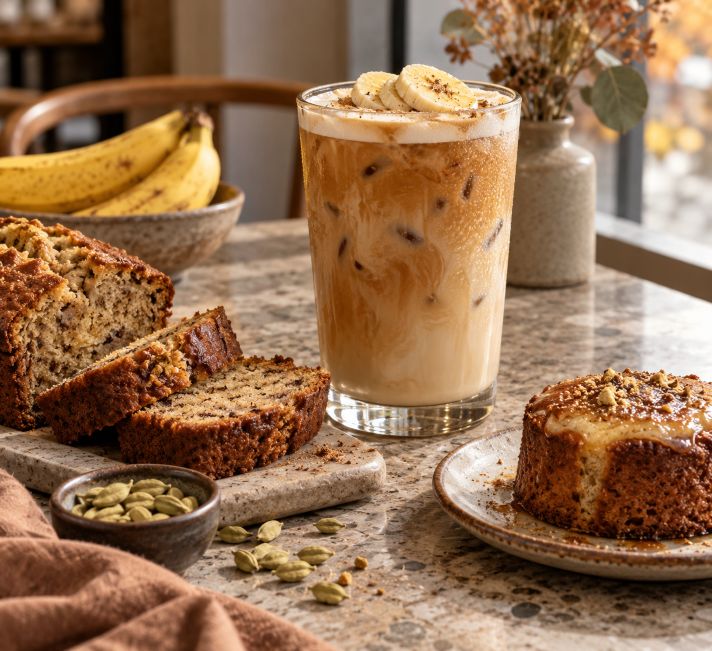
Starbucks introduced its Iced Banana Bread Latte and Iced Banana Bread Chai in August, combining banana, cinnamon and brown sugar flavours. The company says these drinks will remain available beyond autumn, making them a concrete example of a seasonal idea extending into later months.
At home, try a lightly sweetened banana-inspired coffee alongside actual banana bread. Cafés could test one version before expanding the range. Ask customers whether they prefer a stronger fruit note or a subtler baking-spice finish.
2. Give brown butter and cardamom separate roles
Yelp identifies both flavours among this autumn’s alternatives to pumpkin spice. Its figures measure searches, rather than purchases, but provide useful signals for small menu experiments.
Consider brown butter in a biscuit or cake served with coffee. Try cardamom in a gently spiced milk drink. Keeping these flavours separate initially makes it easier to judge which customers enjoy, without creating an overly complicated seasonal recipe.
3. Bring comfort into savoury cooking
October reporting from Yelp shows September searches for “soups near me” increased 442% year over year. Searches for comfort-food restaurants rose 300%. That supports a broader appetite for familiar meals, rather than proving a specific slow-cooker boom.
Translate that interest into a slow-cooked bean stew, mushroom soup or braised vegetables. Home cooks can plan a comforting weekend meal. Cafés could trial a single soup-and-bread lunch special alongside their sweeter autumn offerings.
4. Treat holiday mocktails as complete drinks
IWSR forecasts global no-alcohol analogue volumes will grow 36% between 2024 and 2029. Its research connects these products with moderation and participation in social occasions. The forecast covers alcohol substitutes, so it should not be treated as a direct prediction for homemade mocktails.
For holiday testing, consider cranberry with orange, sparkling tea with ginger, or an apple-based drink with rosemary. These are practical recipe directions, rather than confirmed bestselling combinations. Offer an alcohol-free choice with the same care given to other festive drinks.
5. Keep functional claims grounded
SIAL Paris highlights functional beverages in its 2026 coverage, while stressing evidence, meaningful ingredient quantities and transparent communication. A fashionable ingredient does not establish a health benefit.
For the remaining holiday weeks, start with flavour and clear ingredient information. Trial small batches, invite feedback and keep successful recipes manageable. Keep notes on preparation time and ingredient costs before committing to repeat servings. Seasonal freshness can come from thoughtful choices rather than an entirely new menu.